
Speed Training Tips
By Matt Johnson·

Speed Training Tips
We have noticed a common interest among coaches to which we talk. Coaches want to improve speed. Speed can mean a lot of different things depending on the sport with which the coach is working. Track coaches want sprinters to be quicker. Football coaches want running backs to get to the hole quicker and explode through it. They want receivers to be able to breakaway at the line of scrimmage to be a deep threat or have more quickness across the middle. They want linebackers and defensive backs to get to the ball carrier faster. Similarly, baseball coaches want speed from outfielders to play a ball better or base runners to allow them the quickness to get from one base to the next faster. With that said we would like to focus on explosiveness.
Here are a few ways we can help increase your athlete’s speed. We may even be able to give tips with tools already at your disposal. Many of the things we talk about here, you may already know. Our goal is to drop one or two nuggets that you may not have tried before. We are all learning new tricks daily. We cannot get complacent or our competition will pass us right up. A training program should always introduce something different to not only challenge your athletes but to spark some interest in them to push harder for results. Athletes need different regiments to keep from getting bored with the same old routines.
Wall sprints are very simple as we are sure all of you have a wall to use. Have the athlete lean into the wall with palms against it positioning his/her body at about a 50 degree angle. Have him or her simply sprint as hard as possible into the wall, as though he/she is trying to push the wall as fast as they can. Make sure the athlete is driving his/her knees up quickly as well. Do this for roughly ten seconds. Try this two or three times a week. There are variations available for these such as focusing on just the initial take off and making it powerful. Only go a couple of steps into it.
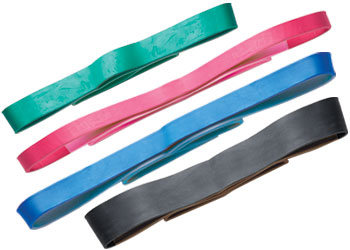
Coaches or trainers can also incorporate some kind of resistance. For instance, have an athlete use a resistance band around the knees and run hard for ten seconds. Then, have him/her step back, drop the band, and repeat the same movement for another 10 seconds.
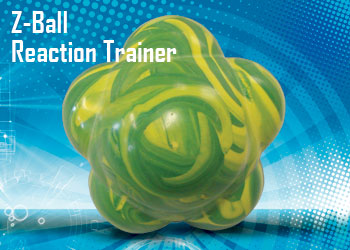
Try this one for coaching speed and reaction time, as well as conditioning. Take a small ball (use a tennis or lacrosse ball or even a jumbo super bounce ball that your kid left in the living room that they got out of some coin machine) and have the athlete stand about ten feet away. Roll the ball at varying speeds and angles, having the athlete run left or right at random. Take it a step further and add a Z-ball reaction trainer, and make it a little more chaotic.


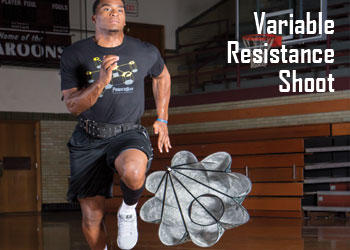
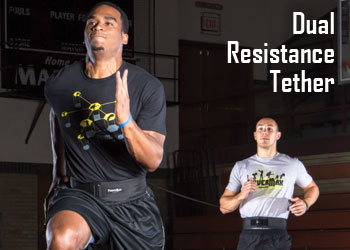
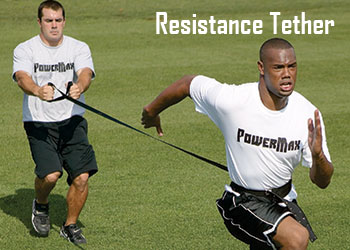
Want to have some more variety? Try chutes or tethers. These tools have been used for years to help challenge athletes to increase speed.
Strength training is key when coaching up speed. The quads, glutes, hamstrings, core, and even the upper body with chest and back, have to be utilized to ensure athletes can give maximum effort. Be sure to use traditional squat and lunge movements for quads, glutes and hamstrings. Hip thrusts, glute ham raises, and kettlebell swings are key to strengthening the glutes, hamstrings and core. Include various anti-rotational movements for the core such as cable machine chops, pallof folds, battle ropes and landmine arches.